
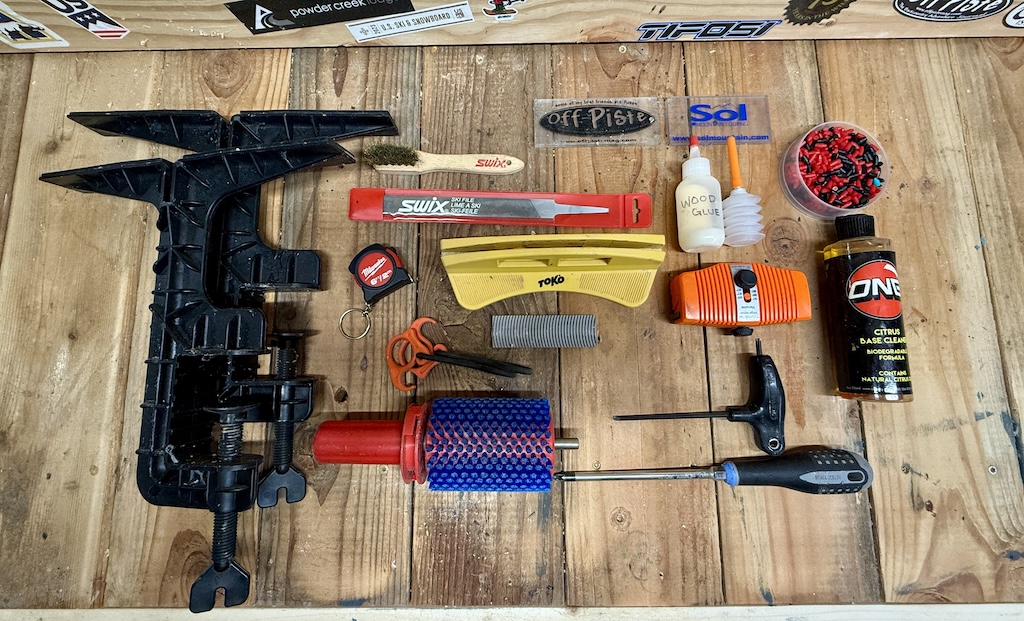
Essential Gear for Home Ski Waxing and Tuning

Waxing your own skis doesn’t require a big investment. The basics are pretty simple: an iron, a scraper and some wax. That said, it’s not hard to take your waxing game up a few notches and even add some basic tuning elements. Doing so will improve your waxing results and broaden your bag of ski maintenance tricks.
After decades of DIY ski waxing and tuning, here are my top 10 picks for elevating your home ski waxing and tuning setup.
Top 10 DIY Ski Waxing and Tuning Essentials
(aside from an iron, wax and a scraper)
 A ski waxing stand, $60-100: There’s no doubt that the easiest way to up your ski waxing game is to add a stable, easy-to-use ski waxing stand. Short of building your own (read our DIY Ski Waxing Bench), I can heartily recommend two options: the Voile Ski Tuning Trees (top image) and the Happy Norwegian Ski Stands (lower image. They each have their merits and do the job very well. The beauty of the Happy Norwegians is that you don’t need a workbench. They work great on a floor, table or any flat surface where there’s room for a pair of skis.
 A roto brush and handle, $90-150: I know we’re not racing out there, but if you have any Nordic nerd in you, it’s hard to resist a good base brushing. And nothing buffs your wax job like a roto brush. They are spendy with the handle, but my experience is they last forever, at least the Swix roto brush I’ve been using. There are a variety of alternative roto brush kits that are priced better than the Swix, including a new one from MountainFlow.
 A ski scraper sharpener, $40: Next to applying wax to your skis, scraping is the next most essential step, and no one likes a dull scraper. I’m not sure how I lived without a ski scraper sharpener for so many years. It’s a modest investment with a very satisfying return. And a sharp scraper isn’t just for waxing either. It’s a great tool for cleaning skis and skins while out skiing, too. Do yourself a favor and add a scraper sharpener to your workbench.
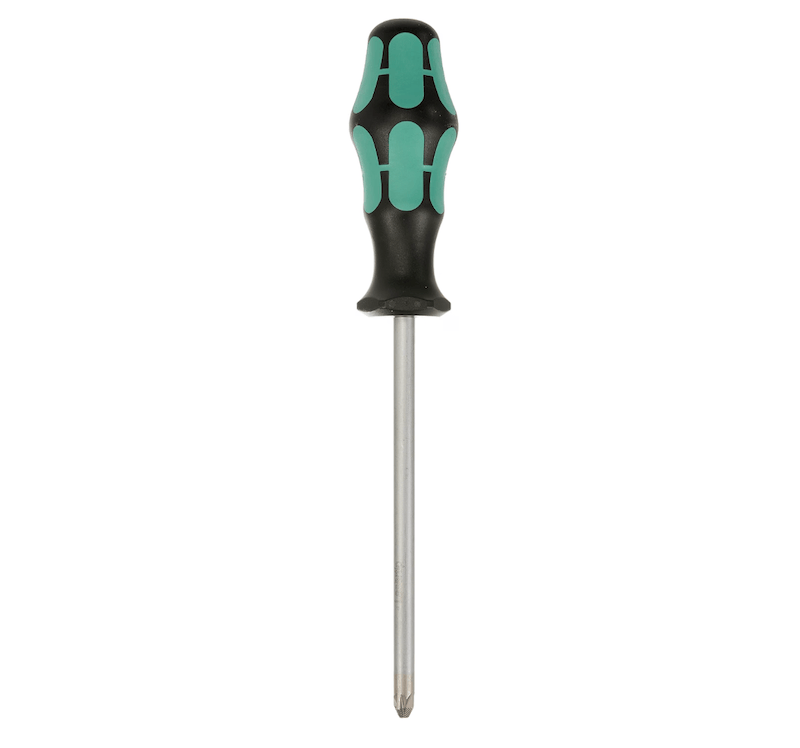
 A dedicated #3 Pozidriv screwdriver and/or T25 Torx, $20: What is a #3 Pozidrive, you ask? It’s a variation on a Philips head screwdriver and matches the screw heads on most ski bindings. Why do you need one? A dedicated ski tech screwdriver is a must if you’re mounting or pulling ski bindings, but it’s also key for routine maintenance and binding checks. I recommend checking your screw tension at least once a year (usually before the season starts). Depending on what bindings you have, a T25 Torx driver is also a good addition. Many bindings, especially tech models, commonly use Torx head screw versus classic #3 Posidriv heads. And do yourself a favor: buy a good one. It makes a difference. The Wera #3 Pozidrive is a solid choice.
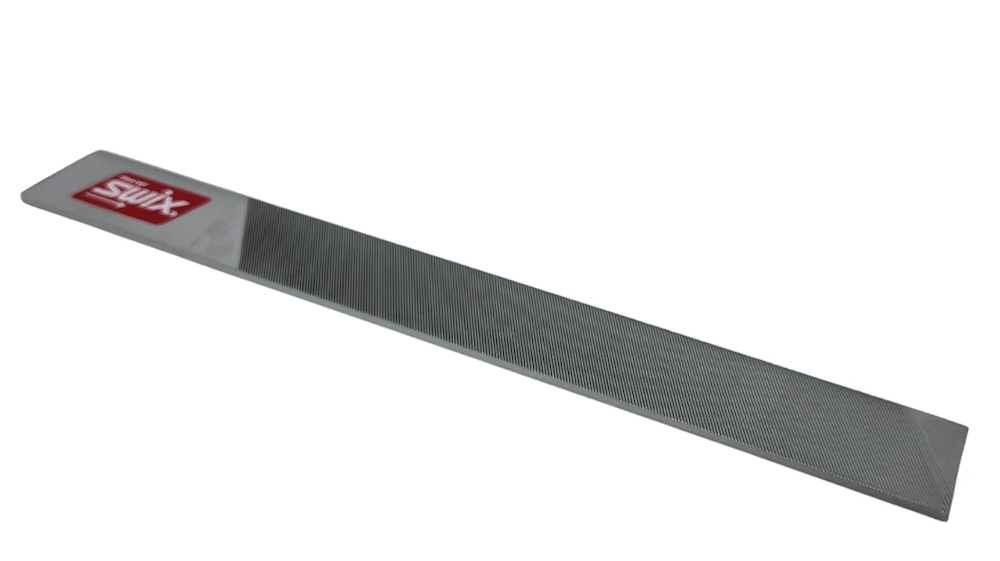
 Flat file + brush, $15-20: A flat file serves a couple of purposes: to sharpen dull base edges and to level or repair the base surface. It works well for smoothing out base scratches and deburring ski edges. Filing is not something I do often, but it’s a good preseason task before you start waxing. A good flat file is the go-to tool if you were unlucky enough to find the shallow-buried rock reef with your skis. The brush, typically with brass bristles, is used to clean the file, keeping it working its best.
 Edge tuner, $40: Sharp edges may not be your top concern when skiing powder, but given hard snow or spring conditions, reliable carving is important. A small handheld ski edge tool like the Swix Multi Edger is easy to use and lets you knock down burs and keep your edges sharp and responsive. You can go with a more basic model that only works on the side of your edges, but the Multi Edger lets you file the side and base faces. It’s worth the extra cost.
 Ski brake retainers, $8: Ski brake retainers are more necessary when waxing alpine skis because most touring bindings let you lock the brakes up in tour mode, keeping them out of the way. Nonetheless, they are inexpensive and handy, allowing unhindered access to wax, iron, scrape, etc. Stout rubber bands work and are widely available from Amazon, but they dry out after a year or two. I recommend the FK Ski Brake Retainer; it’s the best.
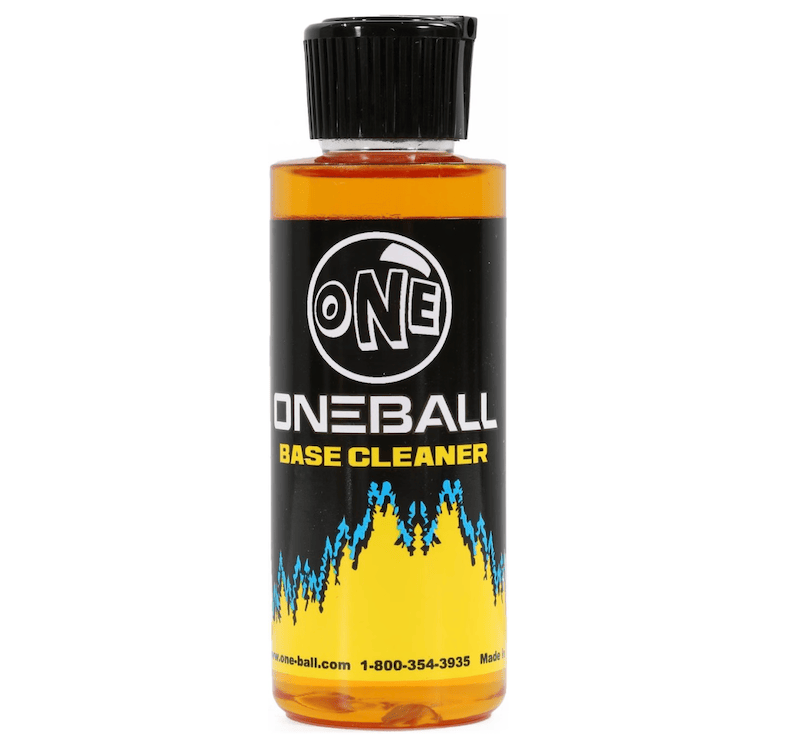
 Base cleaner, $8: Base cleaner is an easy addition to your wax kit. It’s good practice to clean your bases at the start and end of the season, and any time you change wax temps. It’s also good for cleaning sap and other undesirable stuff off your bases. If you really want to live large, add some Swix fiberline cleaning cloth to the mix.
 A fine-tipped glue applicator, $14: A glue applicator is getting a bit nerdy, and it’s moving into binding mounting territory, but a good glue applicator is also useful for replacing screws or if you find yourself swapping bindings around. I find myself reaching for it more often than you might think for various projects, and I definitely use it when mounting skis. There are many glue applicator options on Amazon. The important consideration is applicator tip size. Too big and it won’t be very helpful, too small and it will clog, rendering it useless. I recommend the one pictured and linked here, but it works best if you clean the tip after use. Pro tip: A section of bike shifter cable fits perfectly in the tip for easy clearing.
- Ski plugs, $10:
 Ski plugs are little plastic plugs for filling binding holes. They are most applicable if you are doing your own mounting or moving of bindings. But ski plugs can be handy if you are buying used skis that have been previously mounted and you need to fill an old set of holes. Just hammer them in and use a knife or chisel to trim them flush with the top sheet.





Support us! Off-Piste Mag may earn a small commission from affiliate links when you shop through our links and banners.


